
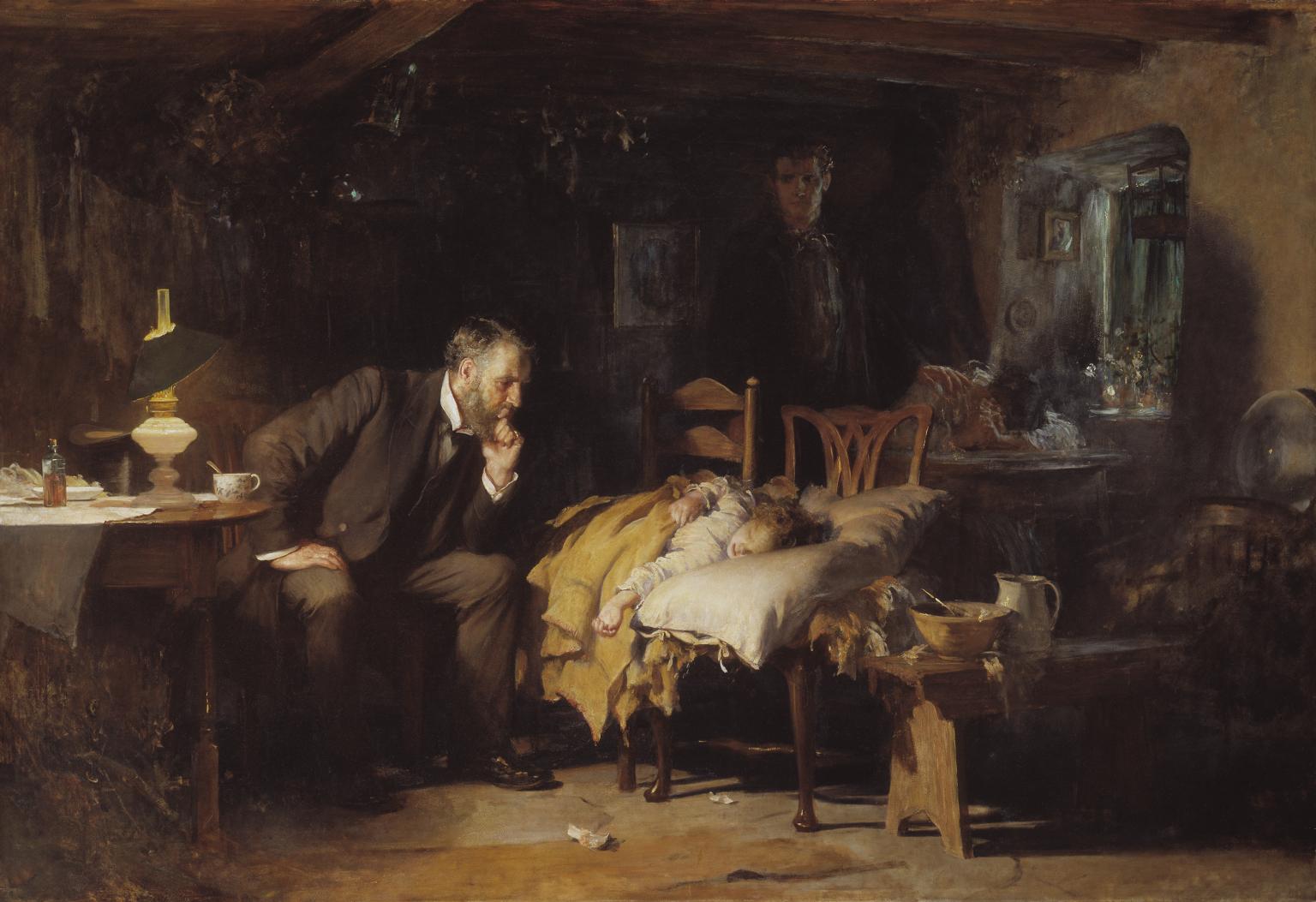
Painting of The Doctor by Luke Fildes, 1891. Photo Courtesy of Wikipedia
The following hypothetical presents the question of if perceived moral obligation to save the most people justifies taking the life of one individual in a medical setting. This scenario includes one doctor and six patients.
One patient is healthy, but the other five are deathly ill. The doctor knows the healthy patient’s organs are compatible with all of the dying patients.
In this scenario, the healthy patient is undergoing surgery for a benign tumor. As the other patients are dying, should the doctor harvest the organs from the healthy person and transplant them to the sick patients in order to save the most lives?
The most common response would be for the doctor to not harvest the healthy person’s organs even if it may save multiple lives.
Medical ethics are based on consent, autonomy and acting in each patient's best interest, so while the healthy patient’s organs could save five lives, the doctor would have to murder a healthy patient instead of allowing the ill patients to die from natural decline.
Sacrificing the one healthy patient’s organs in search of a better outcome for the five terminally ill patients would be considered the utilitarian approach, as it aims to make the decision for the greater good of the majority.
The opposite end of utilitarianism would be the German philosopher Immanuel Kant’s deontological ethics, and this ideology would describe the act of sacrificing the healthy patient to be morally incorrect no matter the circumstance.


.png)



.jpg)
