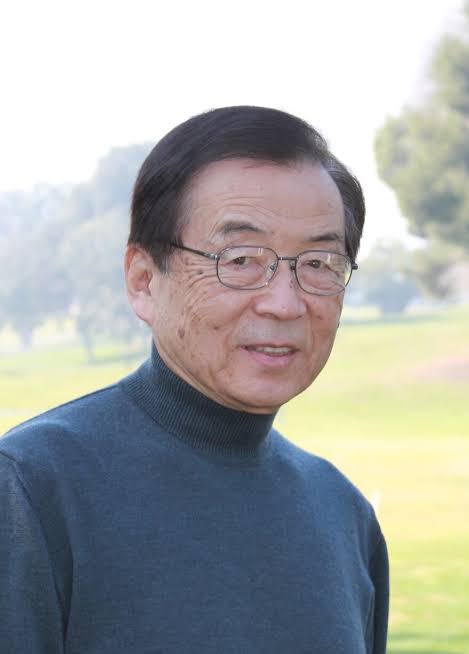
Sam Mihara. Photo courtesy of Wyoming Public Radio.
Sam Mihara is a second-generation Japanese American, award-winning writer and survivor of the incarceration of Japanese Americans.
Mihara shared his life experiences at a conference hosted by the Alaska Historical Society in Homer from Oct. 7-10.
On Dec. 7, 1941, the Empire of Japan attacked Pearl Harbor, bringing the United States into WW II.
Anti-Japanese xenophobia intensified after the attack on Pearl Harbor, which prompted President Franklin D. Roosevelt to issue Executive Order 9066. The order authorized the military to create military zones from which people could be excluded.
Lieutenant General John DeWitt of the Western Defense Command used Executive Order 9066 to forcibly evacuate residents of Japanese descent — many being U.S. citizens — to inland concentration camps.
Mihara was born in Japantown, San Francisco. At nine years old, he and his family were forcibly relocated to the Heart Mountain Relocation Center in Park County, Wyoming.
“Conditions were horrible, my family lived in a 20-foot-by-20-foot room with little to no insulation. The doctors were general practitioners with no experience. My dad went blind due to glaucoma, and my grandfather died of colon cancer,” Mihara said.
Mihara said he was bitter that he and his family, who were American citizens, lost their home, liberty and legal rights.
Mihara said he wanted to have fun outside of school and remembered collecting Crow Native American arrowheads. “We did our best to enjoy life. Now, I know it doesn't help to be upset. Dewitt is gone, there is nothing I can do with him,” he said.
Mihara said he grew up wanting to live in a country where he could speak without fear of consequences and expressed gratitude for the freedom to share his teachings in the United States.
Mihara said he has visited ICE camps in Florida, Texas and California and compared his past experiences with current events.
“It’s inhumane. They shouldn’t be treated the way they are — lacking medical attention, crowded. I wish there were a better solution. Stop the flow of immigrants and you don't have to catch them, improve the conditions in their home countries so they don’t have to move in the first place,” said Mihara.
After Heart Mountain, Mihara studied at University of California, Berkeley and University of California, Los Angeles, where he earned a Masters degree in engineering.
He currently travels the U.S., teaching and lecturing about his experiences.
Learn more about Mihara and upcoming events on his website.