
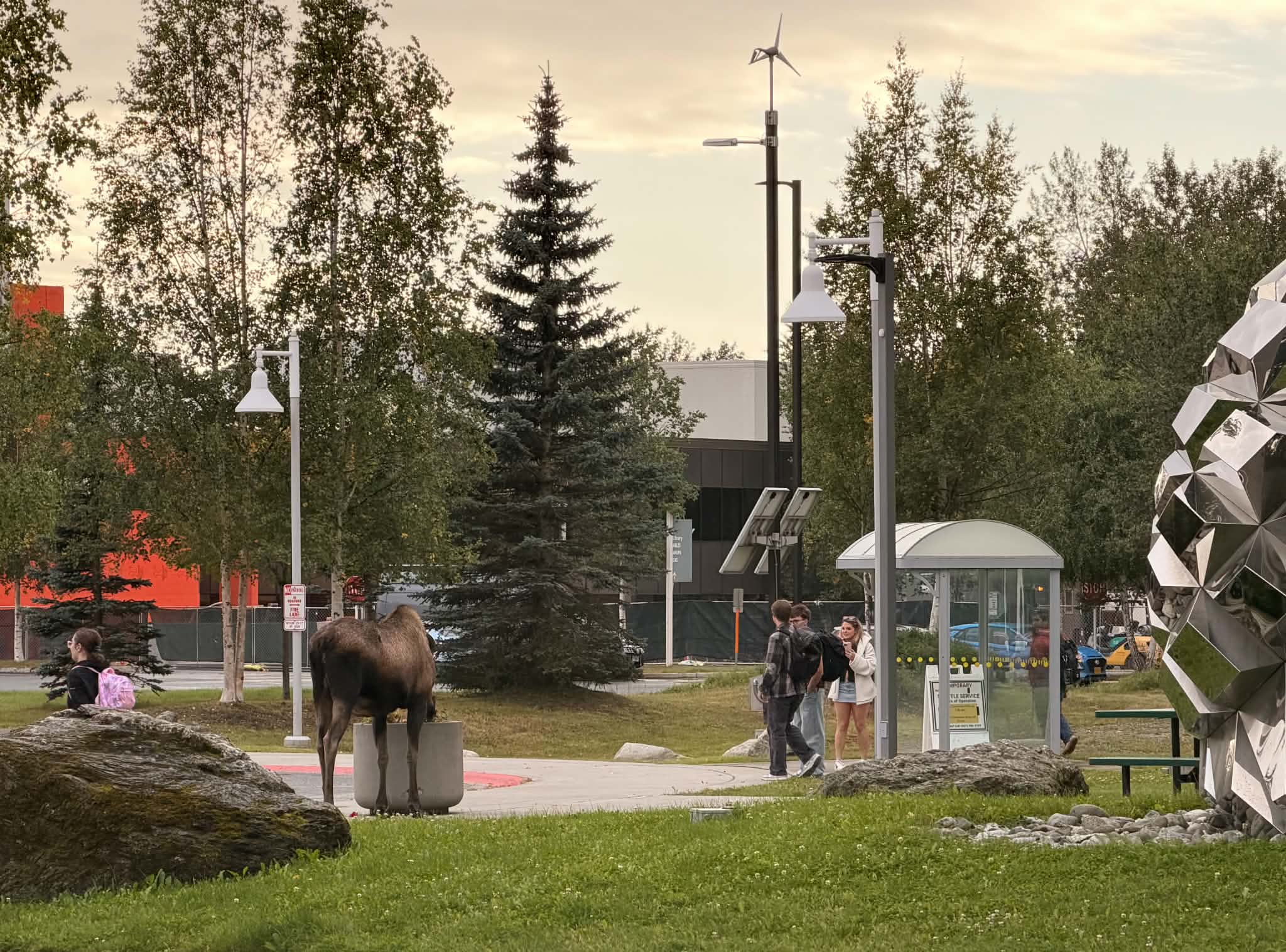
Moose in front of UAA's ConocoPhillips Science Building. Photo by Hannah Dillon.
According to the Alaska Department of Fish and Game, moose begin their mating season between mid-Sept. to Oct. each year. During this time, males are often more aggressive.
As moose appear on campus, it’s important to know what to do if there is an encounter. University Police Department Chief Jeff Earle spoke with The Northern Light to share information on how to stay safe.
“Generally speaking, wildlife is wildlife. It is unpredictable,” Earle said. He recommended giving the animals space and remaining cautious.
If you encounter a moose, watch for body language that may signal agitation, such as laid-back ears and raised hair.
Maintaining a safe distance would allow more time for you to reach safety. It is advised to wear only one earbud to remain aware of your surroundings.
If a moose charges, run and try to place an obstacle between yourself and the animal, or hide behind a barrier. The National Park Service states that moose are unlikely to chase people over long distances.
Earle added, “There is going to be wildlife on campus. Usually we get issues when people start to feed the wildlife. It’s illegal to feed them.”
In the event of an encounter with wildlife on campus, it is advised to report the incident to UPD.


.png)


.jpg)
