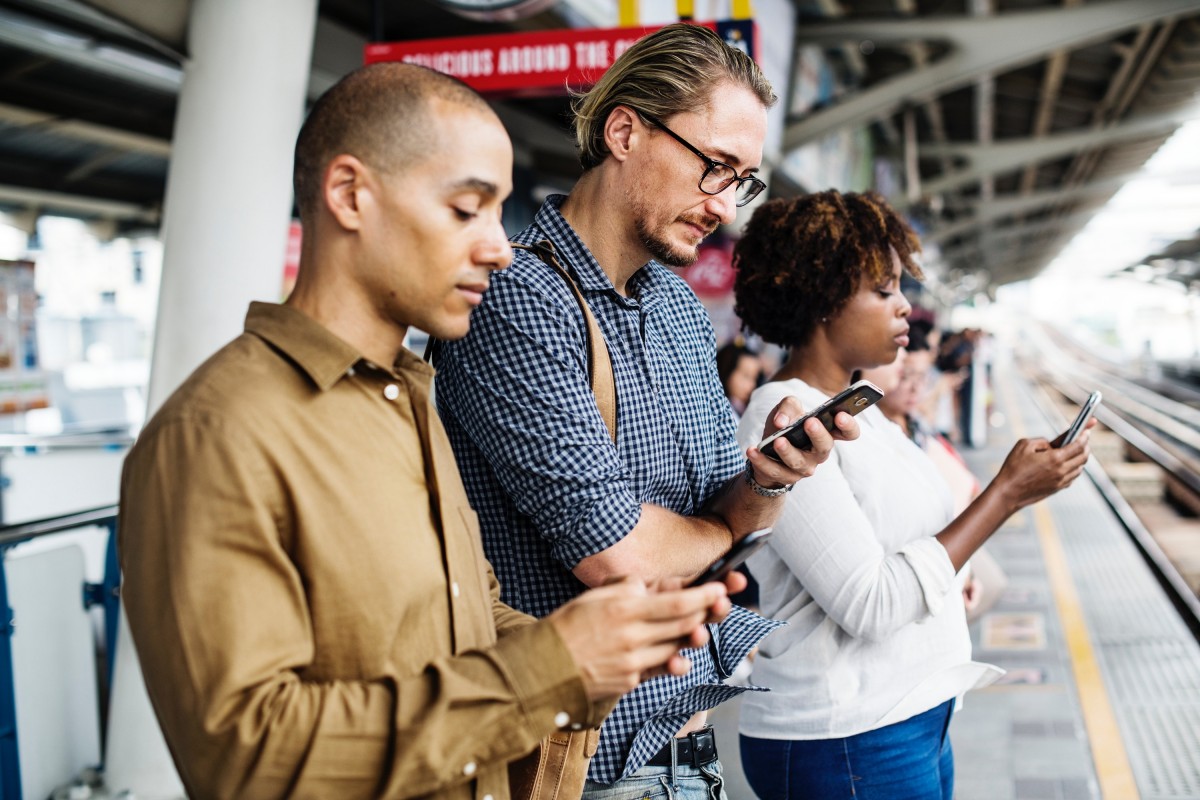
A group of people on their phones while waiting for their train. Photo courtesy of Wikimedia Commons.
Social media is a tool that many individuals can use to experience new perspectives and connect with people from across the globe.
People can be influenced, gain knowledge about others and keep up with events and news across the world.
With modern politics, social media can be leveraged by candidates and citizens to influence public opinion, share political views and stay informed on political issues.
According to a study by the Pew Research Center, 18% of U.S. adults most commonly get their political and election news from social media rather than print publications, radio, television or news websites.
The study found the respondents who use social media were reported by a younger demographic, with 48% of the adults in the group being under 30 years old.
Social media can be a resource for many people, but it is a privilege that comes with risks. A single mistake can attract widespread negativity.
Becoming involved in politics today can feel more like a competition over who is right and who is uneducated on political issues. To some, politics are like the Super Bowl, where all that matters is their team winning.
For many, being on the “right side” of politics brings a sense of satisfaction. In an era of misinformation and negativity, what does being on the right side mean?
Social media is not only used to stay informed about politics, but also to harass people who do not share the same beliefs and opinions.
In a survey shared by The Guardian, 67% of respondents said they had seen widespread hate speech online.
Social media platforms are hubs for cyberbullying and spaces for misinformation to spread.
The Guardian reported on a survey conducted by pollster Ipsos, which included 8,000 people from different age groups, social backgrounds and political preferences across 16 countries, 68% of respondents said social media was where fake news was most commonly spread.
With advancements in technology and the rise of unreliable sources, it is increasingly difficult to distinguish fact from fiction in the news.
People often believe the content presented to them without questioning its accuracy, allowing disinformation and misinformation to spread.
I have been guilty of believing a post was factual when it was not, and I have mistaken artificial intelligence-generated content for authentic images and videos.
According to The Guardian, 87% of respondents said disinformation had a major impact on national politics, while 85% expressed concern about its influence and potential impact on the 2024 elections.
Online news misinformation can contribute to irresponsible reporting from social media users and harm the public as inaccurate information spreads. This raises questions about accountability on the part of social media platforms.
Since millions of users post content online, regulating and monitoring the sheer volume of content can be difficult to manage, allowing misinformation and disinformation to remain online.
The Guardian reported 91% of respondents expected social media platforms to be more vigilant, while political issues or elections are involved to prevent the spread of misinformation and hate speech.
As an individual who uses social media as one source of news, it has changed the way I perceive politics.
I also tend to be confused about what is true or false and feel as though I cannot trust advertisements shared on Instagram for fear of false advertising.
When researching political news, I rely on local and national news sources, like Anchorage Daily News and the Associated Press, rather than entertainment outlets like TMZ.
If you are unsure about the information you are reading or question the reliability of a source, look for credible sources to avoid misinformation.