
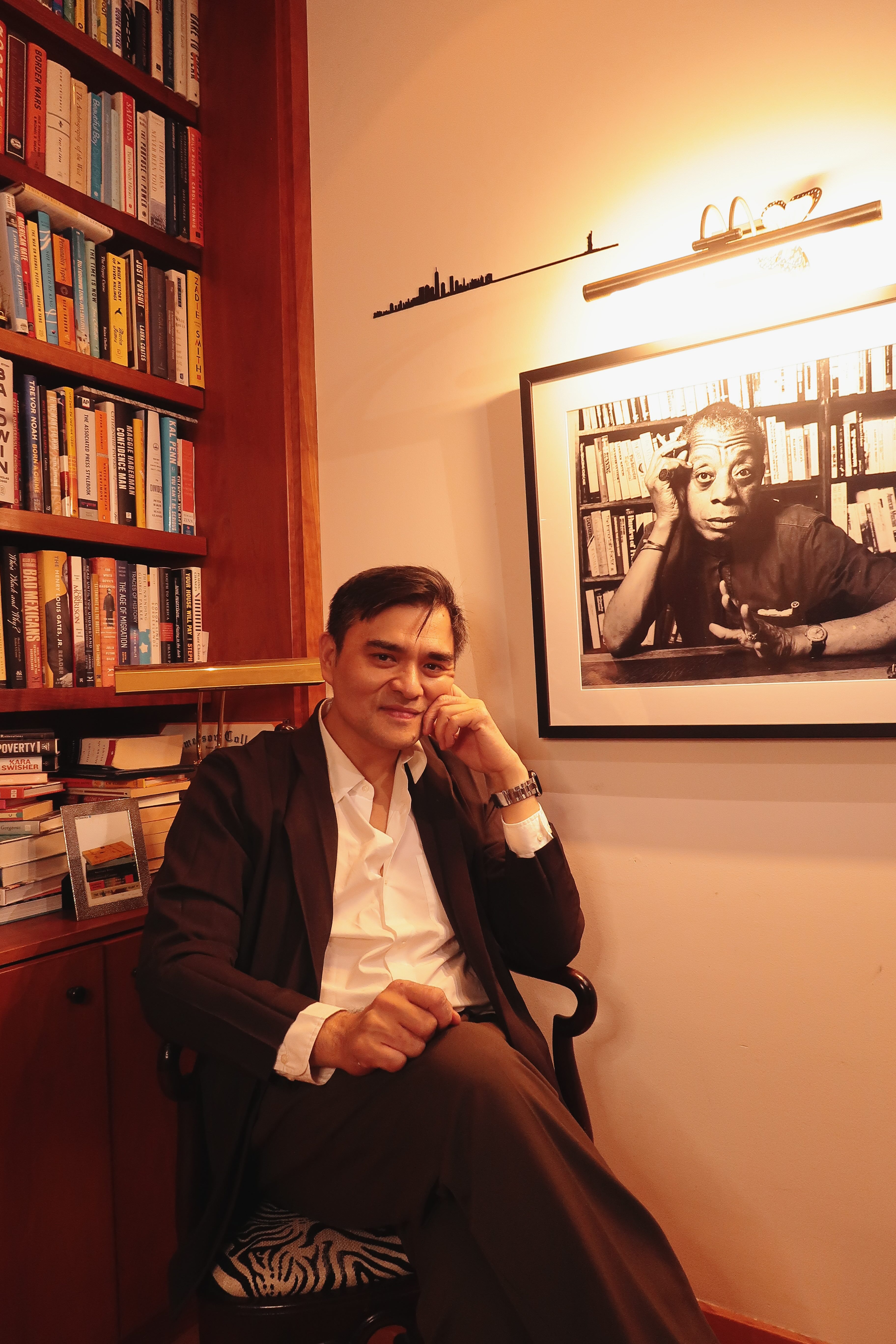
Journalist, filmmaker and immigration rights activist Jose Antonio Vargas. Photo courtesy of Jose Antonio Vargas's website.
Jose Antonio Vargas is a Pulitzer Prize-winning journalist and undocumented immigrant who has spoken out about his journey in the United States since 2011. His film, “Documented: A film by an Undocumented American” was shown on Oct. 9 in UAA’s Social Sciences Building.
The Northern Light spoke with Vargas about his experiences as an undocumented immigrant, including the backlash he faced from his employer and his community.
Vargas publicly disclosed his immigration status in a 2011 article published to The New York Times, titled “My Life as an Undocumented Immigrant.”
“My motivation for speaking out started when I was 30. My driver’s license was expiring and I realized my life was defined by documents that I have or don’t have,” said Vargas.
Vargas said that felt he had to either return to the Philippines, or speak out about his experience.
Because of his experiences, Vargas created Define American, a platform for immigrants to share their stories.
Vargas said that he received backlash from other journalists in 2011.
“Journalists are not supposed to put themselves at the center of a story. Whenever a journalist of color would say something, it was considered an opinion or having an agenda,” said Vargas.
He said that talking about his immigration status also created friction in his community. Vargas said some were supportive while others were angry at him for disclosing his immigration status.
Vargas discussed the current U.S. Immigration and Customs Enforcement (ICE) and deportation measures, and cited the April 21 arrest of Jefferson Hisola as an example. Hisola was arrested for charges from 2020 that had been resolved.
“What has been happening in this country has been building since I arrived here,” Vargas said. “The rise of an anti-immigrant media machine is a big game changer. They are not only targeting those who are here illegally, but those with any immigration status.”
Vargas encouraged immigrants to take care of their mental health, and said, “Hold onto the people who see you as more than a piece of paper.”
For more information on Vargas, visit his website.


.png)


.jpg)
