
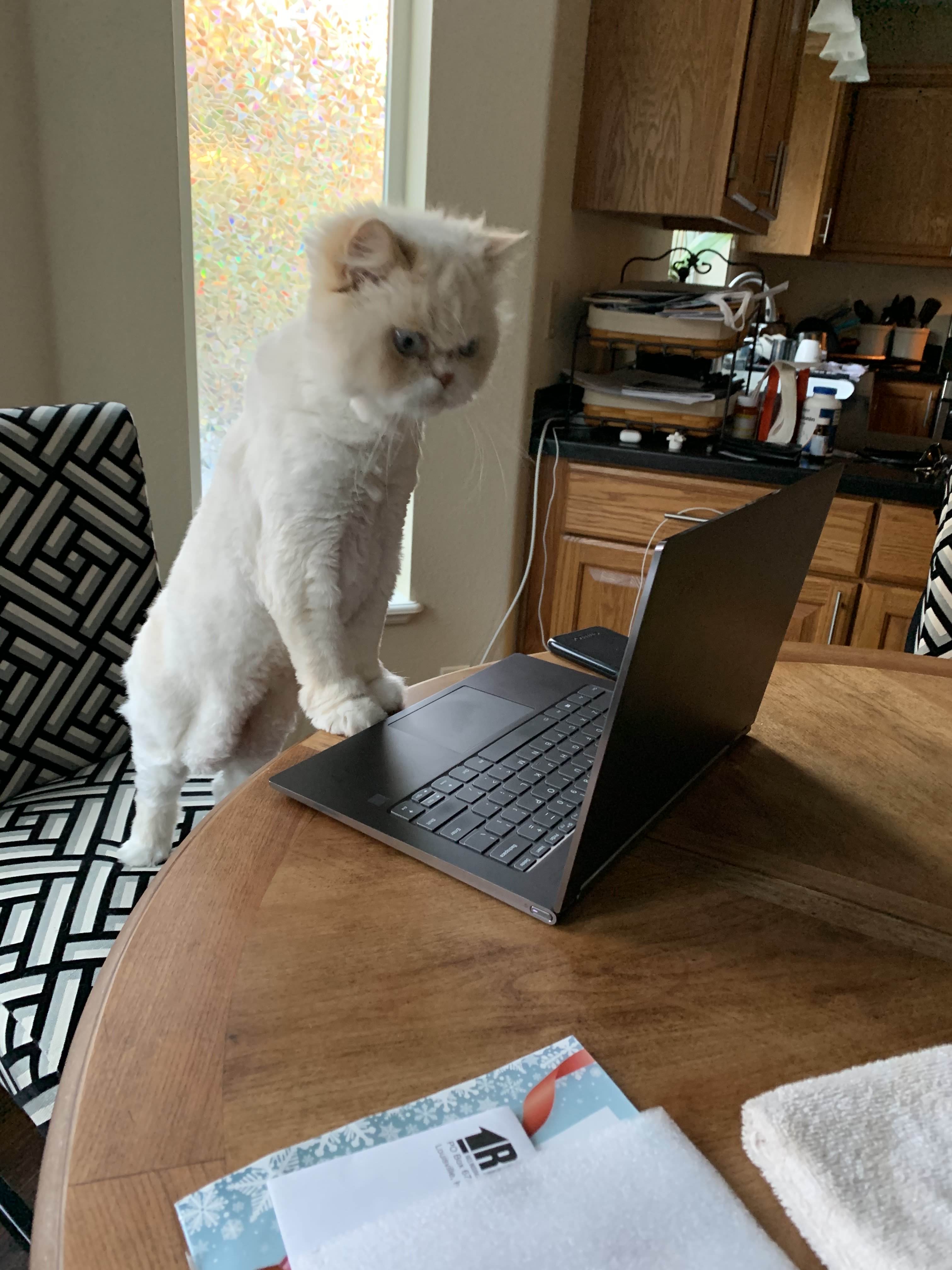
Photo by Anja Burnett.
Although the internet is a relatively new technology, it has managed to impact almost every aspect of our lives. My parents were late adopters of the computer, and my dad famously said he thought computers would be "obsolete" a few years after they began to emerge as a household item. He was clearly wrong.
For many people, computers and the internet have become an extension of the self. Our identities, the way we see ourselves, and the way we interact with others are all tested and mediated through the internet.
I am now typing this paper on my laptop, next to my work computer, while a tiny computer sits in my pocket. My first social media profile was a Facebook account. I was in fifth grade and felt like I was far behind my peers who had made their accounts years before me.
I made my age on the site 21, and by the time I actually became an adult in real life, I was 32 years old on Facebook. Having social media made you cool and signaled to your peers that you were someone worth hanging out with.
Because I had a Facebook, I had more friends, a better social standing and more opportunities to get myself into trouble. If I could just be cool enough, do the right thing, make the right post, then I would be worth something. I also learned more about myself on the internet than potentially anywhere else.
When I was young, I did not know anything about the LGBTQ+ community. I did not know that such a community even existed, or that those individual labels existed.
The internet gave me a safe space to learn about different sexualities, gender expressions, as well as different cultures or perspectives.
I am white, able-bodied, and grew up with enough money to live. There are many things that I would never know about if the internet did not exist.
There are aspects of my identity that I only feel comfortable expressing on the internet. I can interact with niche online spaces that ensure membership is composed of accepting individuals.
I was able to use the internet and its resources to shape my identity. This is a fact I cannot ignore.
It seems clear that the internet will remain a constant in most people’s lives. Certainly there are elements of my personality and identity that are unpalatable to people outside of the internet. But the information that is available to us online allows us to find community.


.png)


.jpg)
