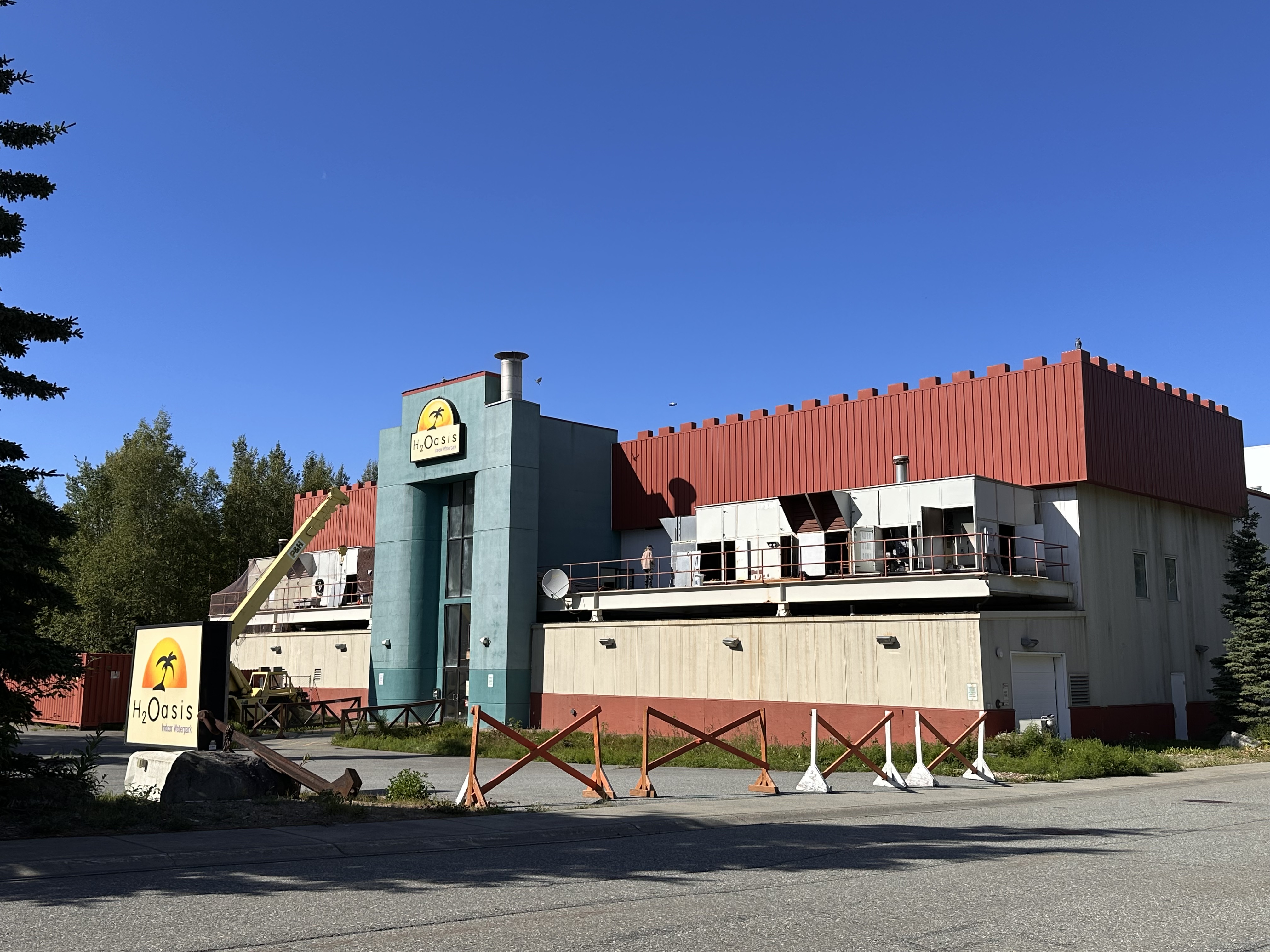
An individual is seen managing H2Oasis on the back deck. Photo by Anja Burnett.
H2Oasis, Anchorage’s only indoor waterpark since 2003, has remained closed since shutting down for extended maintenance in September 2024. The facility faces uncertainty over its reopening after the State of Alaska cited ride violations from October 2024. The waterpark has struggled to reopen while working to meet state-required safety standards for amusement rides in Alaska.
H2Oasis President and CEO Dennis Prendeville provided The Northern Light with documents related to the waterpark’s reopening. The documents included letters signed by Scott Damerow, chief of mechanical inspection with Alaska’s Department of Labor and Workforce Development (DOLWD).
Dennis Sutherland, H2Oasis’ private inspector, inspected the waterpark for more than a decade. Sutherland was also mentioned in one of the letters by the DOLWD. Damerow wrote, “Per my notification on June 25th, Dennis Sutherland did not inspect to any regulations or code, nor did he provide accurate information on each ride.”
Another letter that referenced Sutherland’s June 2026 inspection wrote, “During this inspection, you did not use any national standard code (typically the ASTM), nor did you inspect to the state regulations for recreational devices.”
The State of Alaska revoked Sutherland’s ability to inspect in Alaska following the June inspection.
Sutherland said he follows the American Society for Testing and Materials (ASTM) standards for inspections. He added that ASTM standards did not initially address waterparks when H2Oasis was undergoing construction in 2001.
He said that an inspector’s role is to inspect a ride as the manufacturer intended. Sutherland said, “As an inspector, I can’t tell you to alter your ride, your attraction. You know, it’s–it’s—we’re supposed to be looking at it as it built the way the manufacturer intended it.”
Sutherland said he had never experienced an inspection that resulted in a mandatory shutdown because of the waterpark’s structural issues. “It’s obviously an older facility, you know? It’s not been built to—wasn’t built to current codes,” said Sutherland.
He said recently established state regulations require an immediate shut-off mechanism for each amusement device. He said the requirement was a concern because the rides were built before the regulation and did not originally include the emergency shut-off mechanism.
One document shared by Prendeville included an email sent from William Smoot, former project manager and chief engineer for H2Oasis, who wrote, “I have no issue with operating the slides and master blaster in manual mode, especially using the procedure that you are, one raft or person at a time on the slide.”
According to a letter Prendeville sent to Commissioner Catherine Muñoz with Alaska’s DOLWD, H2Oasis’ Master Blaster is a 575-foot long waterslide produced by now-defunct NBGS International that allows up to two patrons to ride the attraction at one time.
According to Prendeville’s letter, WhiteWater West has since assumed the selling rights of Master Blaster slides.
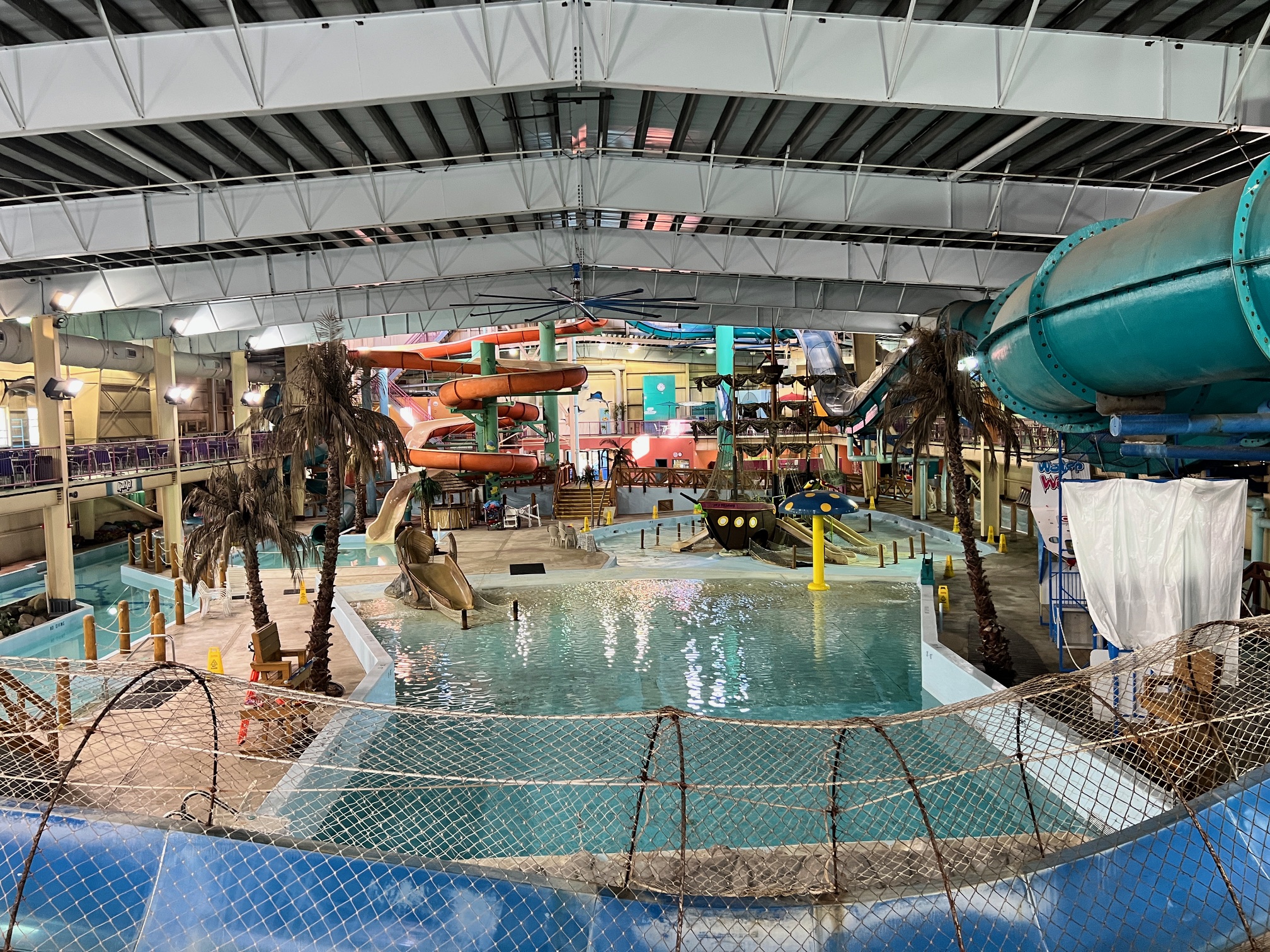
Prendeville said the slide’s original automatic procedure was deemed defective, difficult to maintain and resulted in collisions every year. He added that no collisions have occurred during the years H2Oasis has used manual and visual methods to monitor collisions.
According to the Alaska DOLWD’s 2018 Recreational Devices Statutes and Regulations under 8 AAC 78.070 (d), “A momentary contact or “deadman” switch that controls the operation of the ride is required on each ride except a ride that is solely passenger operated. A momentary contact or “deadman” switch may not be overridden.”
One letter detailed specific requirements H2Oasis needed to meet the state’s minimum standards before reopening the waterpark. One unmet requirement was listed under “Body Slide (enclosed / blue)” and noted there were “Missing bolts on slide sections.”
In an interview, Prendeville estimated that each flange on the slide has approximately 36 bolts. He said Sutherland performed the inspection when two missing bolts were discovered.
Prendeville said that the missing bolts were replaced at the time of Damerow’s report of the incident. Prendeville said, “But he wrote it up like that was a bad thing. It really wasn’t a bad thing at all. You probably could take 10, 12, of those bolts out of there, and it wouldn’t really change it.”
Sutherland said there were approximately three broken bolts on one section of the slide out of roughly 1,300 total bolts. Sutherland recalled asking Damerow how many broken bolts are acceptable.
Sutherland said there would have been concern if a quarter of the bolts were missing in one section. He said it would indicate there is problematic development that needed to be addressed.
Prendeville said that while the Municipality of Anchorage has cleared most of the changes, the state’s concerns remain an obstacle. Building codes are managed by the Municipality of Anchorage, and amusement safety is regulated by the Alaska DOLWD.
In a letter sent by Damerow, he wrote, “The waterpark may be re-opened with some, all, or none of the rides in operation. Any rides not certified for operation when the park is open to the public will require a formal Lock-Out-Tag-Out of their energy systems.”
Prendeville said that if the Master Blaster was not running, there was no sense in opening. Prendeville said he is operating in full compliance and requested official permission to run the Master Blaster slide through alternative approaches that continue to maintain health and safety standards required by the Alaska DOLWD.
Amusement ride regulation in the United States varies by state. According to the Amusement Ride Injury Lawyer website, “Some states may have government oversight, partial government oversight, regulations only on inspections, or no regulation agencies.”
In Alaska, the regulatory agency falls under the DOLWD.
Anchorage Health Department’s Administrative Officer Valarie Clark wrote in an email to The Northern Light that H2Oasis closed in 2024 because the facility’s conditions did not meet the minimum safety requirements.
In October 2026, Damerow wrote in an email to The Northern Light, “The Department is currently awaiting required abatement information related to identified safety issues before operational certificates can be issued. As this process is still underway, we are unable to comment further at this time.”
Editor’s note: This article is a companion piece to “H2Oasis’ continued closure.”